Spring, TX Path to Black Belt: condition1combat.com martial arts
If you live in Spring, Texas and you keep coming back to the idea of martial arts, you probably want more than a workout. You want a skill that holds up under stress, a community that expects your best, and a path that makes sense from day one through black belt. The path at Condition 1 Combat Center, visible through condition1combat.com, fits that profile. The school blends self defense realism with structured progression, and the black belt goal is not marketing fluff. It is an outcome that flows from consistent training, smart coaching, and daily habits you can actually sustain.
I have helped students start at white belt, return after injuries and layoffs, and stand on the mat on test day with a calm that comes only from good reps. The notes below reflect what works in a Spring, TX training week, where family schedules, Houston commutes, and hot summers all factor in.
What black belt actually means here
A black belt at Condition 1 Combat Center is not a final destination. It marks functional competence across striking, clinch, ground, and the judgment to avoid bad decisions. You will see this in how classes are built. Technique progression connects to scenarios. Fitness builds around power endurance, not just burpees for their own sake. Drills move from static to resisted to live. The school trains for adaptability first, style labels second.
Expect to spend several years on this path. Timelines vary with attendance, prior experience, and how well you absorb concepts under stress. A rough range is 4 to 6 years of consistent training for a first degree black belt if you start with no background, sometimes faster if you arrive with solid experience and commit to a heavier schedule. The emphasis stays on quality of movement, not the calendar.
The curriculum architecture, in practice
Condition 1 Combat Center organizes training into phases that run in parallel. You will notice that every technique serves multiple roles: fitness, self defense integration, and belt advancement.
-
Fundamentals, 0 to 12 months. This phase locks in stance, footwork, hip alignment, and safe falls. Striking focuses on high percentage tools: jab, cross, hook, low kick, front kick, knees. On the ground you will build posture, frames, hip escape, technical stand up, guard retention, and basic submissions like rear naked choke and straight armbar. Clinch work covers pummeling, underhooks, posture control, and simple takedowns. Most drills are cooperative with brief resistance windows.
-
Intermediate, 12 to 36 months. Now you put things together. Combinations, feints, entries to clinch, chain wrestling, guard passes that work against a resisting partner, and submission chains. You learn to recover when a move stalls, to cycle between striking and clinch, and to use the wall. Conditioning shifts to interval formats that resemble rounds. You start live sparring with structure and rules that match your level.
-
Advanced, 36 months and up. At this point you work under pressure across ranges and rule sets. You may compete if that suits your goals, but it is not required. Advanced students help anchor the room, mentor newer classmates, and stress test curriculum. Scenario training grows more complex: multiple attackers drills, improvised weapons awareness, voice commands, exits.
Through all three phases, safety is engineered into the room. Clear tap culture. Coaches set contact levels. The school teaches how to apply a hold and how to disengage. That matters for self defense and keeps you training long enough to reach black belt.
Your first 90 days, by feel and by numbers
New students sometimes ask for a perfect plan. There is not one, but there is a reliable pattern that helps almost everyone get traction.
- Start at 2 to 3 classes per week. The jump from zero to two sessions makes the biggest difference. Add a third session if recovery feels good. Most people see real gains at 3 per week without burning out.
- Give each technique two looks. If you learn hip escape Monday, hit it again Wednesday. Repetition across short gaps builds motor memory fast.
- Track one metric you control. For example, complete three rounds on the bag without dropping your hands, or two live rounds with steady breathing. Simplicity beats a spreadsheet you will not keep.
- Build a home micro-routine. Five minutes of hip mobility, shadowboxing, or glute activation on off days. This prevents soreness from becoming an excuse and keeps progress steady.
- Ask one question per class. Short, specific questions drive better coaching than vague ones. You will remember the answer during the next round.
By week six, most beginners breathe easier during pad rounds and maintain base under light pressure. By week ten, you should notice your posture in daily life change a little. You stand up from chairs differently, you turn your hips instead of twisting your knees, and you make eye contact more readily. Small changes, significant outcomes.
Coaching that scales to the room
At Condition 1 Combat Center the mat often holds mixed ranks, which can worry new people. Good coaches solve that with layered drills and clear objectives for each tier. A jab, cross, low kick series means one thing for white belts, another for advanced. The white belt drills basic alignment and balance on each strike. The advanced student works timing variations, angle change, or checks and counters. Both get better without tripping over each other.
Corrections are concise. A coach might say, drive the knee up the middle and land with your foot under your hip, not past it. Then they watch you land three reps and confirm the fix. This short feedback loop keeps intensity up and prevents overthinking.
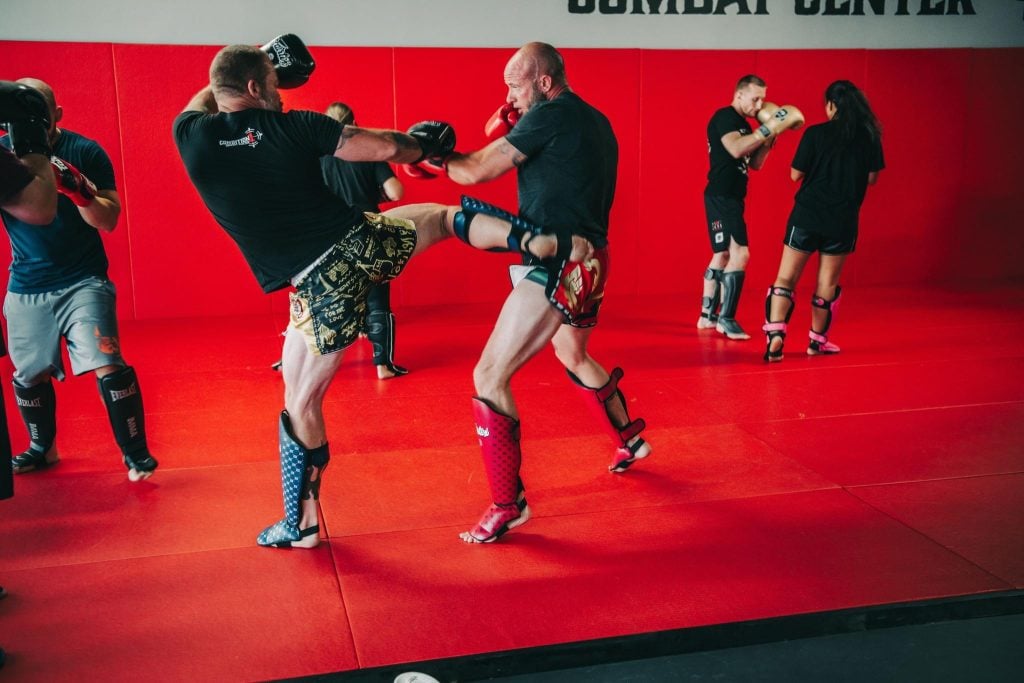
One practical detail: the staff will show you how to hold pads properly. That alone saves wrists and partners. If you have not held Thai pads before, do not guess your way through it. A two minute correction early beats weeks of compensating for pain later.
Self defense focus without theatrics
The center’s self defense work avoids the usual traps. It is not fear mongering and it is not rigid choreographies that fall apart when someone resists. Instead, the program teaches principles and shows how your core skills translate.
Here are examples you are likely to see within the first several months:
-
Boundary and posture drills. You practice verbal commands at a natural speaking volume, step-offs that claim space without escalating, and how to avoid getting cornered near walls or cars.
-
Grip breaks, clinch frames, and escapes. Simple, high percentage movements with dozens of reps. The partner applies realistic pressure while the coach cues anchors like elbow close, head position, and hip direction.
-
Ground disengagement. Technical stand ups under stress, how to frame and kick from supine to buy space, and when to get up instead of chasing a finish.
-
Multiple-person chaos. Not a brawl on day one, but early exposure matters. You learn to angle your exits, call for help, and avoid tunnel vision on a single opponent.
This approach aligns with what you will see on condition1combat.com self defense classes pages and on the mat. The work stays serious without manufactured drama.
Kids learning to love the mat
Condition 1 Combat Center kids martial arts classes are busy for a reason. Parents in Spring want discipline and resilience without turning their children into robots. The kids program hits that balance. Classes combine movement literacy, basic grappling and striking fundamentals, and social skills like listening under excitement. Coaches use games with clear rules to teach footwork, base, and timing. If a child struggles with focus, the station format helps them reset between activities. Wins come small and steady: a clean breakfall, a respectful bow, a confident answer when a coach asks what they learned.
Safety is not negotiable. Contact is measured. Children learn to control power and to stop when a partner taps. They also learn how to speak up. That alone carries into school and sports.
The belt system for kids provides short intervals between stripes, longer stretches between color belts. Reinforcement stays positive. If a student misses a cue or has a rough day, coaches anchor on what went right, then identify one fix to try next time instead of a laundry list. Parents see this in the way children explain class on the drive home. They remember one highlight and one thing they want to improve. Over time, that builds internal motivation.
If you search kids martial arts condition1combat.com you will see schedule blocks that reflect school hours and sports seasons. Coaches expect overlap with soccer and baseball. The curriculum cycles so that a child who can only attend twice a week will still encounter each core skill enough times to progress.
Adult training that respects grown-up bodies and calendars
The adult program leans on efficiency. Most of us in Spring juggle work, kids, and commutes up and down the Hardy Toll Road. The solution is not to grind harder. It is to extract more value from each hour. That is the idea behind adult martial arts training at Condition 1 Combat Center. Warm ups mobilize hips and shoulders, not random circuits. Technique blocks have clear outcomes. Conditioning rounds mimic the demands of a round or a scramble, with rest periods that nudge your capacity up without wrecking you for two days.
If you are easing back into training after years off, the staff will scale impact and intensity without singling you out. Many students start with condition1combat.com adult martial arts training because the expectations are practical. You do not need to be in shape to begin. You get in shape by doing the work.
Pay attention to recovery. The school encourages students to hydrate, eat for protein and color, and sleep as a skill. Coaches can point you to mobility work for your tight areas, whether that is thoracic rotation from desk time or ankle mobility from old sprains. Training smarter means you keep showing up.
How belts, stripes, and tests actually work
Advancement at Condition 1 Combat Center is visible but not performative. You earn stripes for attendance, technical knowledge, and live application. Tests for color belts involve combinations on pads, partner drills, basic scenario responses, and controlled live rounds tailored to rank. No surprise events meant to create viral videos. Just a clear standard you can prepare for with your coaches.
Expect a pre-test period where feedback grows sharper. Coaches will tell you, your jab elbow is flaring, fix it or your shoulder will hate you, or your guard opens too early on the pass, close the hip. Then they watch you fix it. You may retest a piece if nerves hit you hard on day one. That is not failure. It is realistic. The point is to produce competence, not stress spectators.
Black belt candidates carry responsibilities beyond technique. You mentor lower ranks, model safe training, and demonstrate judgment under fatigue. That last part matters in self defense. Good people sometimes make bad choices when tired. The school stresses breath control, space management, and verbal de-escalation precisely because fatigue exposes habits.

Conditioning and injury prevention that add years to your training life
Anyone can push you until you collapse. That is not coaching. Real coaching asks, can you do this again tomorrow. At Condition 1 Combat Center the conditioning work has a job: teach your body to deliver safe, repeatable power rounds, build posture and grip endurance, and improve recovery between efforts.
Here is how that looks:
-
Round structure. Intervals match striking and grappling demands, usually 2 to 5 minute rounds with rest that compresses as your capacity grows. Pace is monitored. Coaches ask for consistent output, not heroic early bursts followed by survival.
-
Movement quality. Dead hangs for shoulders, tempo squats for knee control, hip airplanes for balance, and loaded carries for bracing. Those movements reduce common injuries we see in new adults: cranky shoulders, sore low backs, irritated knees.
-
Contact modulation. Partner rounds start at designated contact, and you can always ask to dial down. This lets you learn timing without accidental injuries.
-
Prehab habits. If you feel a twinge, a coach will likely ask when you last did calf raises, if your ankles can dorsiflex past your toes, or whether you are breathing shallow under stress. Small fixes, big results.
When injuries do happen, and they sometimes do in contact sports, the staff helps you modify training so you do not vanish. A sprained ankle might mean seated bag rounds, upper body pressing and pulling, hand fighting and neck position work. Staying on the mat keeps your head in the game and speeds return.
Integrating competition, if you want it
Competition is optional but available. Some students choose a grappling tournament or a smoker to sharpen focus. The staff will guide weight management, taper weeks, and post-competition decompression. In my experience, one or two competitions a year can accelerate learning because they give you a clear deadline. Whether you choose that route or not, the main path to black belt does not require medals. What matters is consistent application under reasonable pressure, which you get in class every week.
Schedules, attendance patterns, and real life
A good plan survives contact with school pickups and Houston traffic. The center builds schedules that stack classes logically. You might see early evening kids classes followed by adults, so families can train back to back. Morning sessions help shift workers and parents who prefer to front load training before the day explodes.
Most adults find a groove with three sessions on weekdays and a Saturday slot every other week. If your job cycles, align your hard training weeks with lighter work weeks, and treat busy stretches as technique consolidation phases. Tell your coaches when your schedule changes. They will help you choose which classes to attend to keep you moving toward the next stripe or test.
Gear, costs, and practical choices
You can start with loaner gear for a short time, but invest in your own gloves, shin guards, mouthguard, and groin protection relatively early. Ask the staff for specific models that last and fit. Cheap gear fails at bad times. For grappling days, bring a rashguard and shorts without pockets or zippers. If the program segment includes uniforms, the gym will guide you to the correct make and size so you do not guess online.
On costs, tuition structures vary across programs and time commitments. Look at condition1combat.com for current details, but expect options for monthly memberships with family discounts. More important than the exact number is the value per session. If you average three to four visits weekly, you squeeze more from every dollar and move faster through the curriculum. Miss two weeks and you pay twice, once in dollars and again in lost momentum.
Culture you feel the minute you walk in
You cannot fake mat culture. At Condition 1 Combat Center you will see small signs that the place is run with care. People line up gear neatly. Partners thank each other after rounds. Coaches learn names quickly and reference your last correction to hold you accountable. There is banter, but not sarcasm at new students’ expense. Visitors from other schools get respect. If a student gets out of line on contact or attitude, a coach handles it quietly and directly.
This matters because culture either protects or undermines your long-term goals. A healthy room keeps you training through plateaus. It encourages you to try hard things without fear of embarrassment. It keeps kids excited to return and adults willing to push themselves at the end of a long day.
The Spring, TX factor
Local details shape training. Summer heat demands better hydration and smart timing. Afternoon thunderstorms push traffic and arrivals. Families pack schedules with school activities. The gym responds with water breaks built into class, clear expectations about showing up early to wrap hands and warm up, and flexible sessions that still end on time. If you have ever driven Louetta at 6 pm, you know predictability helps.
Condition 1 Combat Center also plugs into the local scene. Students often volunteer at community events or martial arts school spring bring friends from nearby businesses. That deepens commitment. When you know you will see your training partners at the grocery store or your kid’s game, you show up with better energy.
How to get started without overthinking it
You can browse condition1combat.com martial arts programs and self defense classes pages for schedules and an overview. Then pick a day this week, not next, and walk in 10 minutes early. Tell the front desk you want to try a class. Wear breathable clothes, bring water, and if you have prior injuries, mention them to the coach before warm up. Expect to learn three or four focused skills and to leave with sweat on your shirt and one or two clear cues to practice.
If commitment worries you, treat the first month as a test of logistics. Can you make it to the gym three times a week at mostly the same times. If yes, you will likely stick with it. Progress tracks attendance more than talent. The gym’s curriculum is built for exactly that pattern.
Common edge cases and how we handle them
-
Returning athlete with old shoulder issues. We start with careful pressing volume, teach you to set your scapula on punches, and assign dead hangs and face pulls as homework. In clinch, you will learn to use frames and head position to avoid hanging on your shoulder joint.
-
Busy parent who can only make two classes per week. We help you choose classes that capture both striking and grappling exposure each week. You will repeat key patterns across months until they are automatic. Expect progress, just a bit slower.
-
Student nervous about contact. We keep you at light contact until your eyes stay calm and your posture holds under pressure. You will still learn timing and distance. Then, with consent, we increase intensity. No surprises.
-
Prior rank from another style. Respect matters. We ask you to demonstrate where you feel strongest, then we attach that strength to our curriculum. You keep your earned skills while you learn the house standards.
-
Teen crossing from kids to adult classes. We manage that transition with hybrid sessions and partner assignments that build confidence. The goal is to accelerate maturity without throwing a teen into the deep end on day one.
These scenarios come up often, and they have clear solutions. That is what you get in a mature program that has seen thousands of classes and patterns repeat.
What progress really looks like at 6, 12, and 24 months
At six months, you likely move with purpose. Your jab lands straight. You can escape side control from most partners your size. You can pummel for underhooks without losing balance. Your cardio supports three rounds without panic breathing. You have two or three favorite combinations and one reliable takedown or sweep.
At one year, you feel uncomfortable when you skip training, a good sign. You can explain a technique you learned months ago to a newer student, which proves you understand it. You start seeing the opponent’s shoulders and hips telegraph intent. You recover from bad positions without feeling lost. Self defense scenarios make sense. You know when to disengage and how.
At two years, your body mechanics have changed. Friends notice you move differently. On the mat, you see options instead of single moves. You make fewer big mistakes, and your rounds feel like chess with sweat. You still learn something every class, but you integrate it faster. Black belt feels a long way off, yet you understand how you will get there.
A note on mindset and patience
Nothing derails students faster than comparing timelines. The fastest path to black belt is not sprinting for six months and quitting. It is building a schedule you actually keep, communicating with coaches, and stacking small wins. If you miss a week, return without drama. If a technique confuses you, ask for a narrower piece to focus on. If you feel overwhelmed, tell a coach. Clear words fix most problems.
Your future self will thank you for a simple habit: after each class, write down one thing you did well and one thing to work on next time. That anchors progress in reality, not feelings. You will see trends over months that keep you motivated.
Why Condition 1 Combat Center, and why now
Condition 1 Combat Center martial arts classes in Spring combine realistic self defense with a progression that moves you from rookie to competent practitioner. You can see it across programs: kids martial arts at Condition 1 Combat Center builds confidence and discipline, adult martial arts training at Condition 1 Combat Center respects your body and constraints, and the overall culture lifts everyone. The website, condition1combat.com, gives you the broad strokes, but the experience on the mat is where you will feel the difference.
If you have been waiting for a sign, let it be this: put a class on your calendar and show up. The path to black belt is not mystical. It is a series of honest sessions, coached well, in a room that takes care of its people. Show up this week, then show up again. The rest will follow.
