Condition 1 Combat Center MMA Training: Mental Toughness Tactics
Mental toughness is not a slogan on the wall. It is a set of trained responses that hold steady when your lungs are on fire, the canvas feels like quicksand, and a fresh opponent is trying to put you away. At Condition 1 Combat Center, we build that ability on purpose. Not by breaking athletes for the sake of bravado, but by designing stress the way strength coaches design load. The method applies across our programs, whether someone comes for the MMA team, Brazilian jiu jitsu, Muay Thai, boxing, or self defense classes. The work feels different, but the aim is the same: make calm and clarity a habit under pressure.
I have seen fighters with brilliant mitt work fade the moment a bout shifts from their plan. I have also watched quiet white belts from the Condition 1 Combat Center bjj gym learn to survive terrible positions, round after round, and later win tournaments by two points because they did not panic with twenty seconds left. The difference rarely comes from talent. It comes from training mental habits like posture, breath, focus, and tactical patience, then stress testing them until they stick.
What mental toughness actually is in a fight sport
People throw the term around, but in the gym and on fight night, it breaks down into specific skills.
- Composure, the ability to keep posture, protect vital targets, and stay coachable when hurt or tired.
- Task focus, choosing the next best action instead of spiraling on mistakes.
- Recovery, bringing heart rate and mind back to baseline between flurries and between rounds.
- Risk judgment, picking the right time to bite down and the right time to conserve.
- Adaptability, switching plans when the first one dies on contact.
Notice what is not in that list. Toughness is not ignoring pain, and it is definitely not making bad tactical choices just to look brave. We coach athletes to recognize the difference. Grit without a plan becomes a highlight reel for someone else.
The gym culture that makes toughness stick
At the mma gym Condition 1 Combat Center, toughness is part curriculum, part environment. The culture matters. Language matters. We do not reward chaos. Sparring is earned. Live rounds have a purpose and a theme. There is room for laughter between rounds, but not at the expense of standards. Coaches demand attention to detail in small drills, because that control shows up later when chaos starts.
Beginners hear a consistent message across programs, whether they walk in asking for Condition 1 Combat Center mma training, a focused boxing gym session, or Muay Thai on the pads. The message is: get your breath, get your stance, get your eyes up. Protect yourself, even when you are winning. If you win the habit, you win the exchange more often than not.
Veterans hear it too, only phrased for their stage. Champions do not need louder speeches. They need higher constraints, cleaner feedback, and sometimes the permission to say no to useless grind.
How we manufacture pressure without breaking athletes
You can build mental resilience the same way you build VO2 or grip endurance, with progressive exposure. The trick is to make the challenge just above the athlete’s current capacity, then recover enough to learn from it. Here are five core drills we use to train under pressure across programs, from mma training to Brazilian jiu jitsu and striking:
-
Shark tank with intent: One athlete stays in while fresh partners rotate every 30 to 60 seconds. We set a narrow task, like defending the back or finishing a single leg against the wall. The intent matters. If the goal is defense, the partners apply clean pressure but avoid risky scrambles. If the goal is offense, we throttle the defense accordingly to keep the focus on the rep quality, not scoreboard sparring.
-
Adversity starts: We start the round in a bad spot. Bottom side with a heavy cross face. Hands wrapped by a body lock against the fence. In boxing or Muay Thai, we start with your back on the ropes and the partner up two points with a minute to go. You learn to breathe in the hole and build a path out instead of flailing.
-
Constraint rounds: We remove weapons or options to shape decisions. In Muay Thai, no teeps for a round, which forces you to manage range with footwork and frames. In BJJ, only sweeps from closed guard, then only from half guard. In MMA, no ground and pound for two minutes, then add it back. Constraints isolate the mental load by shrinking the choices.
-
Audible switch rounds: At random intervals, a coach calls a switch, like striking to wrestling, or guard passing to back takes only. Boxers might switch from southpaw to orthodox on command. The brain learns to pivot plans without freezing or apologizing for mistakes.
-
The last minute test: We blow a whistle with 60 seconds left and cue the athlete to implement a specific tactic while exhausted, like doubling the jab to enter or executing a two-move guard pass chain. It mimics the part of a fight where many athletes mentally quit. We ask them to choose action.
We do not run these every day. Hard rounds are earned by good sleep, clean movement in drills, and medical readiness. Our coaches at the mma gym Condition 1 Combat Center make sure the dial goes up and down across the week. Without that, people confuse fatigue with growth and end up injured or flat.
Breath, posture, and the quick reset
When someone’s mind is slipping, they show it in their posture and breath first. Shoulders climb, eyes drop, stance narrows. Striking defense falls apart by a half inch. In grappling, the neck lengthens and the hips quit. We build automatic resets that take three to five seconds. They show up during Condition 1 Combat Center boxing mitt work, in Muay Thai clinch drills, and inside the brazilian jiu jitsu training room.
Here is the micro-sequence we teach often:
- Eyes up, chin down, and find a straight line with your spine for one breath.
- Two count inhale through the nose, three to four count exhale through the mouth.
- Feel the feet evenly, then load the back hip a touch to restore power and balance.
- Name the next first action, out loud if needed. Jab. Frame. Pummel left. Elbow over hook. Strip the grip.
Repeated under mild stress first, then under fatigue, the reset becomes a reflex. I have seen it save athletes after a flash knockdown in sparring and after a bad takedown attempt that landed them in a guillotine. The cue interrupts the panic cascade and brings the mind back to task.
Specific mental skills for BJJ at the Condition 1 Combat Center bjj gym
Jiu jitsu punishes impatience. The quickest way to gas out is to fight every inch. We coach positional patience by setting time-based goals rather than scramble-based ones. For example, when mounted, the athlete must maintain frames and breath for 20 seconds before the escape sequence begins. They learn to tolerate discomfort, watch the top player shift weight, and take the escape in rhythm rather than forcing it.

Grip battles train focus, not just fingers. When we run condition1combat.com brazilian jiu jitsu training rounds, we sometimes score only the grip wins. Establish sleeve and collar. Break the collar. Reestablish the inside tie. Quickly the athlete sees that every sweep or pass is prewritten by the grip exchange.
We also teach acceptance of a bad position without resignation. Acceptance means you stop spending energy on denial. You get your frames, you hide your neck, you manage the underhook fight, and you talk yourself through the next best step. A blue belt once told me after class, “The difference was I decided being stuck in bottom half didn’t mean I was losing. It meant I was gathering information.” He won his match the next weekend 4 to 0 with two clean sweeps.
Striking composure in the Muay Thai and boxing rooms
You do not learn to stay calm after being hit by avoiding contact. You learn it by controlling the dose and debriefing right after. At the Condition 1 Combat Center muay thai gym and in our boxing gym sessions, we use technical sparring, often at 40 to 60 percent, to isolate reactions. The partner lands a clean shot, we pause for a beat, and the athlete repeats the correct response three times. For a jab to the nose, the response might be eyes up, step to the outside, double jab back. For a counter right hand, it might be shoulder roll, return to center, body jab. The repetition erases the shame response and builds a counter habit.
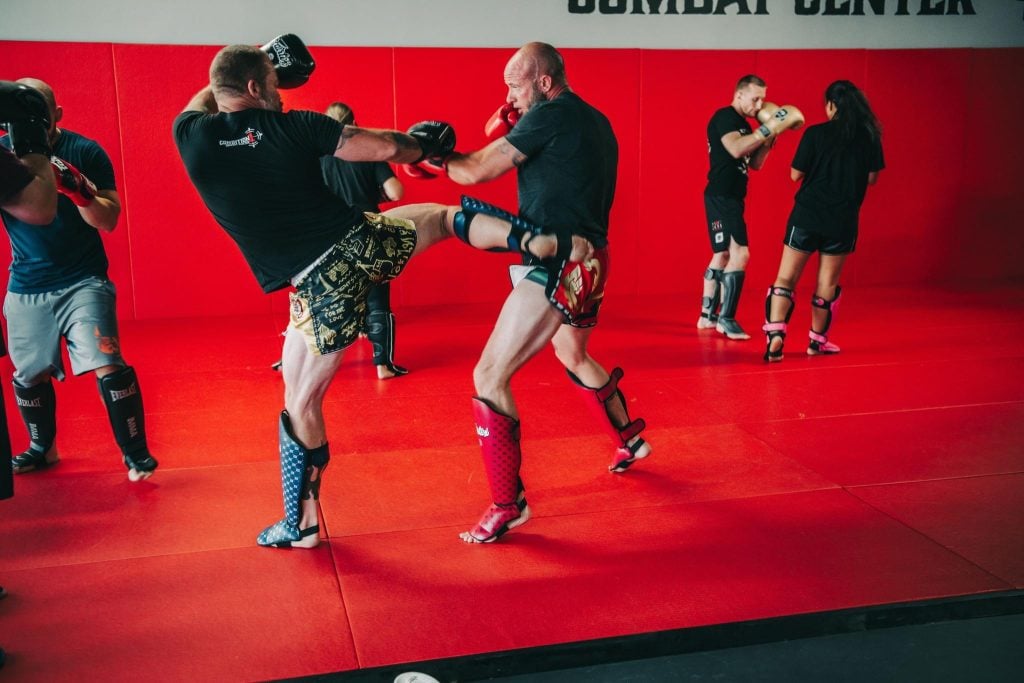
Footwork is also psychology. Fighters panic when the cage or ropes erase their options. We teach ringcraft as a breathing drill. If your back touches, you circle out on an exhale and re-center before you throw. You repeat it until the exhale becomes a turn signal for the hips. By the time intensity increases, that breath is saving you without a debate in your head.
Switching gears, the underrated mental skill in MMA
MMA punishes specialists who cannot transition. The mental piece is switching plans mid-combination without telegraphing panic. We design combined rounds where a clean stuffed shot triggers an automatic shift to collar tie and knee series, or where a missed overhand immediately becomes a level change to the body. During mma training at condition1combat.com, we run three minute rounds that rotate emphasis every 45 seconds: open space striking, fence wrestling, top control with light ground strikes, then back to space. Athletes learn to carry composure between domains.
A common problem is apologizing with the body after a mistake. The flinch, the shrug, the verbal sorry. We do not allow it in training. You miss a takedown, you frame, you pummel, you get your head position back. You miss a check on a low kick, you bite down on stance and answer with a safe score. The apology becomes action.
Competition day nerves, simple and specific
On fight day or tournament day, the biggest enemy is uncertainty. We clean that up with checklists and narrow cues. The goal is to do fewer things with more commitment. Here is a short set of cues we review backstage or before stepping on the mat:
- First minute, lower your heart rate. Breathe behind the mouthguard on every exit.
- Win the eyes. Do not stare, but do not let your gaze drop first.
- Establish your A entry early. Jab heavy to the chest, or right kick to the arm, or collar tie to wrist control.
- At the first sign of chaos, call your reset in your head and do it.
- Between rounds or matches, sit down, feet up, two slow breaths, one tactical note from the coach only.
We keep the warmup familiar. If you always hit four minutes of mitts and two minutes of sprawls at the gym, you do the same under the banner. If you always flow roll to sweat, you do not add sprints backstage because someone on social media said so. Consistency calms the system.
Weight cuts, when done, are planned and conservative. The mental strain of a crash cut cancels any imagined benefit. We prefer athletes who walk around within a reasonable range of their class and use water manipulation carefully in the final stretch. We also rehearse post weigh-in eating so there is no guesswork when cravings hit.
Recovery habits that grow resilience instead of burnout
Mental toughness is not forged by constant suffering. It grows best when stress is followed by recovery and analysis. After a hard session at the Condition 1 Combat Center mma gym, we often ask for three numbers in a training log: session RPE from 1 to 10, mood on a 5 point scale, and one tactical win. Patterns emerge. If RPE stays at 9 for four straight days and mood drops, we adjust. Athletes who ignore those signals feel tough for a while, then vanish from the room with overuse injuries or nagging illness.
Film study is another recovery tool. The day after a fight or a big spar, we watch key exchanges with a neutral tone. No catastrophizing, no victory laps. We name the decision, not the emotion. “You reached on the break and got countered. Next time, step off line on the break or shell until your feet reset.” The brain learns faster when it understands cause and effect without shame buried inside it.
Journaling works for many, especially newer athletes and those in self defense classes Condition 1 Combat Center offers. The entries are short. What was I afraid of going in. What changed when the round started. What did I do well under stress. What will I test next time. The act of naming fear reduces its bite.

Sleep is the simplest mental toughness tool that almost no one respects enough. Six hours shows up as sloppy guard retention, lazy checks, and slow exits on the fence. Eight hours turns the same athlete into a patient problem solver. We treat sleep like hand wraps, required equipment.
Teaching fear management in self defense classes
Self defense scenarios are different from sport. The aim is to survive, escape, and if needed, disable the threat long enough to exit. The nervous system does not care about rules. It cares about shock. We respect that at the self defense classes condition1combat.com runs by staging surprise within safe parameters. Lights might dim. Verbal aggression is present. Protective gear allows impact.
Students learn three principles fast. Move first, speak when needed, and finish the job you choose. Mental toughness here is the refusal to freeze. One of our favorite drills is the noise drill. Two coaches create chaos with pads and voices while the student executes a simple sequence like palm strike, knee, exit line. The sequence is boring on paper, electric under noise. After two or three exposures, you see shoulders drop and eyes lift. The student learns they can act inside adrenaline.
We also teach the aftermath mindset. Call. Breathe. Take notes while the memory is fresh. Seek safe help. The mind often shakes hardest after the danger passes. Having a script matters.
Common mistakes that masquerade as toughness
The most common error is chasing exhaustion as proof of work. Fatigue feels noble. It is also an awful teacher. If every session becomes a test, nothing is a test. We keep some days crisp and submaximal on purpose to preserve decision speed.
Ego is another trap. Fighters attach identity to hardness, then ignore good coaching to save face. The cure is transparency. Coaches at the mma gym condition1combat.com level with athletes about what matters, and we celebrate smart choices. I have stopped rounds early when a fighter lost structure, then resumed after one technical correction. That fighter later thanked me for saving the day from becoming a brawl that taught nothing.
For grapplers, the mistake is confusing stalling with patience. Patience still advances frames, off-balances, and grip breaks. Stalling is waiting for a standup or a mercy error. We punish stalling in the room by resetting the position or assigning movement goals.
Finally, the mind sometimes uses injuries as a toughness theatre. Training through a sprained ankle or a concussion is not grit, it is self-sabotage. We set medical lines and enforce them. Toughness includes the courage to sit.
A small story from the room
One of our athletes at the Condition 1 Combat Center muay thai gym had a habit of shutting down after eating a hard left kick. In sparring, you could see the flinch ripple through the next thirty seconds. We worked a simple plan. Each time he caught a clean left kick, he had to exhale, step down the outside, and throw a body jab. In the early weeks, he landed the jab maybe 20 percent of the time. After four weeks, he was catching it 60 percent, and he stopped giving ground. In his next amateur fight, he faced a southpaw kicker. By round two, the opponent stopped throwing the left body kick because it kept costing him position. That is mental toughness. Not the absence of pain, but the presence of a trained, useful answer.
Building a day that trains the mind as much as the body
For athletes juggling MMA classes, BJJ drilling, and a boxing session at Condition 1 Combat Center, the day can feel full. The organization matters. You can train mental adaptability by mixing sessions with intent. For example, hit a technical BJJ session in the morning with constraints that force slow breathing and problem solving. In the evening, do a controlled striking spar with audible switches. Between them, nap or walk, eat cleanly, and write two lines in a notebook: one fear, one action. Nothing mystical, just consistent self-direction. Within a month, you will feel a shift during chaos.
On the flip side, if you have to train after work with 60 minutes to spare, you can still build the habit. Choose a compact block. For ten minutes, shadowbox with footwork emphasis, then run five minutes of sprawls and stance resets. Finish with five minutes of breath laddering, two counts in and three out, walking in a small circle. The workout is not glamorous. It quietly builds a base you will use when the mat time spikes on weekends.
Measuring what you cannot touch
The scoreboard in a fight tells part of the story. In practice, we track mental metrics you can feel. Did you make eye contact with the coach between rounds and hear the instruction. Did you implement the first adjustment called, like doubling the jab or pummeling for inside ties. Under fatigue, was your stance within one inch of your start stance, or did you collapse narrow. Those checks matter more than a sizzle reel clip from pad work.
If you like numbers, try this. After every live round for a week, rate your composure from 1 to 5. Then write the first cue you used when things got tough. Review the notes on Sunday. Patterns jump out. Maybe you lose composure when your back hits the fence, so you train fence exits on a breath cue. Maybe the problem is hands dropping after combinations, so you shadowbox combinations where the last shot always flows into a cover or angle. You are not guessing anymore. You are measuring and training the attribute.
Working with different athlete types
Not everyone needs the same flavor of push. A novice in the brazilian jiu jitsu training Condition 1 Combat Center offers might need permission to slow down and feel a frame before exploding. A seasoned wrestler crossing into MMA might need to learn how to stall creatively for five seconds to recover after a big lift, rather than shooting again out of habit. A boxer with slick head movement might need work on emotional recovery after getting clipped, because the identity of being untouchable is brittle.
We have had Muay Thai athletes who freeze when asked to shoot a double in MMA classes. We solve it by layering the wrestling entry after a familiar strike, like right kick to step down into the level change. Once the mind sees the bridge, the freeze loosens.
What to expect when you step into Condition 1
People first notice the mix. Pro fighters warming up next to a parent in evening self defense classes. A BJJ black belt drilling collar drags while the boxing class snaps jabs on the line. The mat culture leans supportive, but standards are clear. Coaches call for rest when form melts. Partners match intensity, not ego.
If you are looking for a place to build the kind of toughness that shows up when it counts, you will find the tools here. The Condition 1 Combat Center mma training schedule has room for beginners and veterans. The bjj gym sessions layer positional control with live problem solving. The muay thai gym slots craft timing, balance, and ringcraft. The boxing gym hours hone eyes and feet. And the self defense classes teach decision making when the scenario is unfamiliar and loud.
We also welcome questions. If your work hours are odd, we will help you shape a week that still builds skill. If you are coming off an injury, we check this out will protect the area, stage your return, and keep your mind engaged with smart drills. If fight prep is on your mind, we can lay out a timeline with milestones so the stress has a place to go.
A final note on confidence
Confidence is earned, but it is also maintained. I remind athletes that toughness is not a finish line. It is a practice. It looks like choosing to breathe when embarrassment flares. It sounds like hearing one clean instruction in a noisy room. It feels like keeping your feet beneath you when the crowd roars. Train those things on purpose, and the rest of your game, whether at condition1combat.com mma training sessions, a BJJ tournament, or under the bright lights of a Saturday night card, will have a platform sturdy enough to carry it.
You do not need to be fearless. You need to be practiced. At Condition 1 Combat Center, that is the kind of toughness we teach. Step in, touch the line, and start stacking the small reps that become big poise when it matters.